Login to enhance your online experience. Login or Create an Account

 0 Items (Empty)

Land Rover Freelander 1997-2006 Workshop Repair Manual
 |
on PDF can be viewed using free PDF reader like adobe , or foxit or nitro . File size 146 Mb Searchable PDF document with bookmarks. This Workshop Manual is for the following Land Rovers made between 1997-2006
Engine and Transmissions covered by this manual: Engines
Transmissions
Contents
|
Tools & supplies (minimum)
- Full metric socket & spanner set (including deep sockets), extensions, universal joint.
- Torque wrench (capable 0–200 Nm) and torque-angle gauge/adapter (if bolts are torque-to-yield).
- Breaker bar.
- Ratchet, impact gun (use carefully, not for final torque).
- Engine hoist or engine support bar (if engine mount(s) must be removed).
- Floor jack + axle stands; wheel chocks.
- Screwdrivers, pliers, hose pliers.
- Gasket scraper / plastic razor blades; brass or nylon brushes.
- Straight edge (1 m or longer) and feeler gauge (for head flatness check).
- Thread chaser or M10–M12 tap (for cleaning head bolt threads in block).
- Soft-faced mallet.
- Drain pans for coolant and oil.
- Clean rags, solvent (brake cleaner), shop vacuum.
- Sealant (manufacturer-approved RTV where required), copper anti-seize, and medium-strength threadlocker (if specified).
- New parts: correct head gasket set (complete set), new head bolts (use new torque-to-yield bolts if specified), valve cover gasket, intake & exhaust manifold gaskets, cam/crank seals if leaking, timing belt/chain kit (belt, tensioner, idlers) and water pump recommended, thermostat, oil & oil filter, coolant, any O-rings/hose clamps disturbed.
- Safety gear: gloves, safety glasses, respirator for solvents if needed.
Safety precautions
- Work on a flat level surface, chock wheels. Support vehicle securely on stands.
- Disconnect battery negative terminal before starting.
- Only work on a cold engine. Drain coolant and oil into proper containers and dispose/recycle legally.
- Support engine when removing engine mounts — failure to do so can drop engine and cause severe injury/damage.
- Do not inhale old gasket debris or solvents; wear eye/hand protection.
- Keep ignition keys away; tag wiring and hoses to avoid mistakes.
Overview (what you’re doing)
Replacing a head gasket requires removing ancillaries and timing components, carefully removing the cylinder head, inspecting surfaces, cleaning, replacing the gasket and bolts, and reassembling to correct torque/timing. Also replace related wear items (timing belt/water pump/thermostat) while the job is open — cost-effective and reduces rework.
Step-by-step procedure
1) Preparation
- Gather workshop manual (model-specific torque values, bolt sequences, timing marks).
- Disconnect battery negative. Label electrical connectors, vacuum lines, and hoses with tape.
- Remove airbox and intake plumbing for access.
2) Drain fluids
- Drain engine oil and coolant into pans. Remove oil filter.
- Remove ancillary belts (alternator, A/C) and accessories that block access.
3) Remove ancillaries and intake/exhaust
- Remove intake manifold and throttle body (label hoses and vacuum lines).
- Remove exhaust manifold/header and heatshield (spray penetrating oil on studs; use correct sockets). Replace exhaust manifold gasket(s).
- Remove engine cover, accessory brackets, alternator, power steering pump (support/leave hoses connected if possible).
- If HVAC compressor prevents removal and you don’t want to disconnect refrigerant, carefully unbolt and hang compressor with wire (do not let hoses carry load).
4) Remove timing components
- Set engine to TDC on cylinder 1. Mark timing positions/photo for reference.
- Remove timing belt/chain covers. Note or photograph sprocket positions.
- If belt-driven, remove timing belt following manual. If chain, follow chain removal procedure.
- Replace timing belt/chain, tensioner, idlers and water pump while accessible. This is highly recommended.
5) Prepare to remove cylinder head
- Remove valve cover(s). Note camshaft positions and mark camshafts if necessary.
- Loosen and remove head bolts in the reverse order of tightening — in several steps (e.g., 10 Nm increments) until finger loose. Do not pry the head off.
- If engine is fitted with timing chain/tensioner, ensure chain is supported before lifting head to avoid dropping cams.
6) Remove head
- Use an engine hoist or have a helper; lift head straight up. Heads can be heavy (and may be stuck due to gasket/sealant).
- Put head on bench on wooden blocks.
7) Inspect head & block
- Inspect head for cracks (especially around valves), check for blown gasket signs: oil in coolant, coolant in oil, combustion leakage marks.
- Clean head and block mating surfaces: remove gasket material carefully with plastic scrapers and solvent. Do not gouge surfaces.
- Use straight edge and feeler gauge to check warpage across head and block mating surfaces (spec from manual). If warpage exceeds spec, head must be machined or replaced.
- Clean head bolt holes in block with thread chaser; blow out debris. Clean head bolt threads if re-using bolts (but generally replace if torque-to-yield).
8) Prepare new components
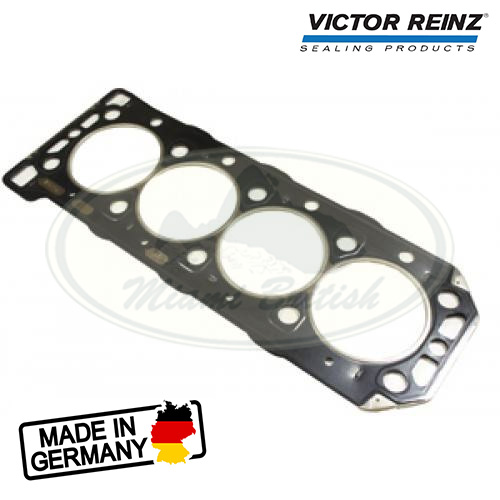
- Use new head gasket (ensure correct orientation — markings “UP” or cylinder order).
- Use new head bolts if specified (many modern engines are torque-to-yield and must be replaced).
- Replace valve cover gasket and any seals disturbed.
9) Installation — head to block
- Ensure mating surfaces are clean & dry. Place new head gasket on block, aligning dowels.
- Carefully lower the head onto the gasket (straight down).
- Lightly oil bolt threads only if manual specifies (some manuals require dry threads and use threadlocker or anti-seize on specific threads). Follow manual.
- Thread head bolts by hand, then tighten in manufacturer sequence in stages: e.g., 30 Nm, then 60 Nm, then final stage or final angular turns if required. Use torque-angle gauge for angle steps.
- If bolts are torque-to-yield, follow the exact angle procedure — they must be replaced, and you cannot reuse old bolts.
How to use key tools
- Torque wrench: clean threads, set to first stage torque, use correct sequence, apply smooth even pull until wrench clicks. For angle-turns, use torque-angle adapter or marking method to ensure precise degrees.
- Breaker bar: use for initial loosening of tight bolts only; don’t use to tighten to final, use torque wrench.
- Engine hoist/support: attach to head lifting points or cam cover bolts as directed. Lift evenly to avoid bending head.
- Gasket scraper: use plastic or brass to avoid scoring surfaces. Work at low angle.
- Straight edge & feeler gauge: place straight edge across several directions; slide feeler gauge at points to measure highest gap.
- Thread chaser: carefully run down bolt holes to remove corrosion; blow out debris afterwards. Do not use oversized taps.
10) Reassembly (timing & ancillaries)
- Reinstall cam timing components; set timing marks exactly per manual. If you replaced belt/chain, tension correctly.
- Reinstall valve cover with new gasket, manifolds with new gaskets, sensors and all ancillaries. Replace any faulty hoses/clamps.
- Refill with fresh oil and new oil filter. Refill coolant with correct specification/mixture.
- Reconnect battery.
11) Initial start and checks
- Before starting, crank engine without ignition for 10–20 seconds to build oil pressure (or follow manual priming). Check oil pressure gauge.
- Start engine; run at idle. Check for coolant leaks, oil leaks, exhaust leaks, and listen for abnormal noises.
- Monitor coolant temperature and verify heater core flow. Check for combustion gas in coolant (block test) if doubts remain.
- Re-torque head bolts only if manual instructs — many torque-to-yield bolts must not be re-torqued. Some engines require re-check after heat cycles — follow manual.
12) Post-job items
- After 100–500 km, re-check torque on accessible bolts (if manual requires), check coolant & oil levels, check timing belt tension, ensure no leaks. Replace thermostat if you did not earlier and problems persist.
- Dispose of old fluids and parts responsibly.
Common pitfalls & how to avoid them
- Not replacing head bolts: many are single-use torque-to-yield. Reusing them leads to failure. Replace bolts.
- Ignoring flatness: installing a gasket on a warped head causes re-failure. Measure with straight edge; machine head if out of spec.
- Incorrect torque sequence/values or skipping angle turns: causes uneven clamping and leaks. Always follow the manual.
- Poor cleaning: gouging or leaving residue will prevent sealing. Use plastic scrapers and clean thoroughly.
- Forgetting timing marks/correct timing reassembly: results in misfire or engine damage. Photograph and mark before disassembly; use manual.
- Not replacing related wear parts: timing belt, water pump, tensioners are cheap insurance while you’re there.
- Improper bolt lubrication: follow the manual — incorrect lubrication changes torque reading. Don’t guess.
- Not supporting engine when removing mounts: can drop motor and cause injury/damage.
- Not pressure-testing cooling system after job: hidden leaks can wreck the head again.
Replacement parts suggested (minimum)
- Head gasket (engine-specific full set)
- Head bolts (new torque-to-yield set if specified)
- Valve cover gasket
- Intake & exhaust manifold gaskets
- Timing belt/chain kit (belt, tensioner, idlers); water pump
- Thermostat & gasket
- Cam/crank seals (if leaking or age)
- Oil & oil filter
- Coolant (fill)
- Any sensor seals or O-rings disturbed
Estimated time
- Experienced tech: 8–16 hours (depends on engine and complications).
- DIY weekender: 2–3 days or more.
Final notes (no-nonsense)
- Follow the factory workshop manual precisely for torque specifications, bolt sequences, and timing procedures. That is critical.
- Replace head bolts and timing items while you have access. Clean, measure, and don’t rush reassembly.
- If head is warped or cracked, machining or replacement is mandatory — sealing a bad head with a new gasket is a recipe for immediate failure.
No more.
rteeqp73
- Full metric socket & spanner set (including deep sockets), extensions, universal joint.
- Torque wrench (capable 0–200 Nm) and torque-angle gauge/adapter (if bolts are torque-to-yield).
- Breaker bar.
- Ratchet, impact gun (use carefully, not for final torque).
- Engine hoist or engine support bar (if engine mount(s) must be removed).
- Floor jack + axle stands; wheel chocks.
- Screwdrivers, pliers, hose pliers.
- Gasket scraper / plastic razor blades; brass or nylon brushes.
- Straight edge (1 m or longer) and feeler gauge (for head flatness check).
- Thread chaser or M10–M12 tap (for cleaning head bolt threads in block).
- Soft-faced mallet.
- Drain pans for coolant and oil.
- Clean rags, solvent (brake cleaner), shop vacuum.
- Sealant (manufacturer-approved RTV where required), copper anti-seize, and medium-strength threadlocker (if specified).
- New parts: correct head gasket set (complete set), new head bolts (use new torque-to-yield bolts if specified), valve cover gasket, intake & exhaust manifold gaskets, cam/crank seals if leaking, timing belt/chain kit (belt, tensioner, idlers) and water pump recommended, thermostat, oil & oil filter, coolant, any O-rings/hose clamps disturbed.
- Safety gear: gloves, safety glasses, respirator for solvents if needed.
Safety precautions
- Work on a flat level surface, chock wheels. Support vehicle securely on stands.
- Disconnect battery negative terminal before starting.
- Only work on a cold engine. Drain coolant and oil into proper containers and dispose/recycle legally.
- Support engine when removing engine mounts — failure to do so can drop engine and cause severe injury/damage.
- Do not inhale old gasket debris or solvents; wear eye/hand protection.
- Keep ignition keys away; tag wiring and hoses to avoid mistakes.
Overview (what you’re doing)
Replacing a head gasket requires removing ancillaries and timing components, carefully removing the cylinder head, inspecting surfaces, cleaning, replacing the gasket and bolts, and reassembling to correct torque/timing. Also replace related wear items (timing belt/water pump/thermostat) while the job is open — cost-effective and reduces rework.
Step-by-step procedure
1) Preparation
- Gather workshop manual (model-specific torque values, bolt sequences, timing marks).
- Disconnect battery negative. Label electrical connectors, vacuum lines, and hoses with tape.
- Remove airbox and intake plumbing for access.
2) Drain fluids
- Drain engine oil and coolant into pans. Remove oil filter.
- Remove ancillary belts (alternator, A/C) and accessories that block access.
3) Remove ancillaries and intake/exhaust
- Remove intake manifold and throttle body (label hoses and vacuum lines).
- Remove exhaust manifold/header and heatshield (spray penetrating oil on studs; use correct sockets). Replace exhaust manifold gasket(s).
- Remove engine cover, accessory brackets, alternator, power steering pump (support/leave hoses connected if possible).
- If HVAC compressor prevents removal and you don’t want to disconnect refrigerant, carefully unbolt and hang compressor with wire (do not let hoses carry load).
4) Remove timing components
- Set engine to TDC on cylinder 1. Mark timing positions/photo for reference.
- Remove timing belt/chain covers. Note or photograph sprocket positions.
- If belt-driven, remove timing belt following manual. If chain, follow chain removal procedure.
- Replace timing belt/chain, tensioner, idlers and water pump while accessible. This is highly recommended.
5) Prepare to remove cylinder head
- Remove valve cover(s). Note camshaft positions and mark camshafts if necessary.
- Loosen and remove head bolts in the reverse order of tightening — in several steps (e.g., 10 Nm increments) until finger loose. Do not pry the head off.
- If engine is fitted with timing chain/tensioner, ensure chain is supported before lifting head to avoid dropping cams.
6) Remove head
- Use an engine hoist or have a helper; lift head straight up. Heads can be heavy (and may be stuck due to gasket/sealant).
- Put head on bench on wooden blocks.
7) Inspect head & block
- Inspect head for cracks (especially around valves), check for blown gasket signs: oil in coolant, coolant in oil, combustion leakage marks.
- Clean head and block mating surfaces: remove gasket material carefully with plastic scrapers and solvent. Do not gouge surfaces.
- Use straight edge and feeler gauge to check warpage across head and block mating surfaces (spec from manual). If warpage exceeds spec, head must be machined or replaced.
- Clean head bolt holes in block with thread chaser; blow out debris. Clean head bolt threads if re-using bolts (but generally replace if torque-to-yield).
8) Prepare new components
- Use new head gasket (ensure correct orientation — markings “UP” or cylinder order).
- Use new head bolts if specified (many modern engines are torque-to-yield and must be replaced).
- Replace valve cover gasket and any seals disturbed.
9) Installation — head to block
- Ensure mating surfaces are clean & dry. Place new head gasket on block, aligning dowels.
- Carefully lower the head onto the gasket (straight down).
- Lightly oil bolt threads only if manual specifies (some manuals require dry threads and use threadlocker or anti-seize on specific threads). Follow manual.
- Thread head bolts by hand, then tighten in manufacturer sequence in stages: e.g., 30 Nm, then 60 Nm, then final stage or final angular turns if required. Use torque-angle gauge for angle steps.
- If bolts are torque-to-yield, follow the exact angle procedure — they must be replaced, and you cannot reuse old bolts.
How to use key tools
- Torque wrench: clean threads, set to first stage torque, use correct sequence, apply smooth even pull until wrench clicks. For angle-turns, use torque-angle adapter or marking method to ensure precise degrees.
- Breaker bar: use for initial loosening of tight bolts only; don’t use to tighten to final, use torque wrench.
- Engine hoist/support: attach to head lifting points or cam cover bolts as directed. Lift evenly to avoid bending head.
- Gasket scraper: use plastic or brass to avoid scoring surfaces. Work at low angle.
- Straight edge & feeler gauge: place straight edge across several directions; slide feeler gauge at points to measure highest gap.
- Thread chaser: carefully run down bolt holes to remove corrosion; blow out debris afterwards. Do not use oversized taps.
10) Reassembly (timing & ancillaries)
- Reinstall cam timing components; set timing marks exactly per manual. If you replaced belt/chain, tension correctly.
- Reinstall valve cover with new gasket, manifolds with new gaskets, sensors and all ancillaries. Replace any faulty hoses/clamps.
- Refill with fresh oil and new oil filter. Refill coolant with correct specification/mixture.
- Reconnect battery.
11) Initial start and checks
- Before starting, crank engine without ignition for 10–20 seconds to build oil pressure (or follow manual priming). Check oil pressure gauge.
- Start engine; run at idle. Check for coolant leaks, oil leaks, exhaust leaks, and listen for abnormal noises.
- Monitor coolant temperature and verify heater core flow. Check for combustion gas in coolant (block test) if doubts remain.
- Re-torque head bolts only if manual instructs — many torque-to-yield bolts must not be re-torqued. Some engines require re-check after heat cycles — follow manual.
12) Post-job items
- After 100–500 km, re-check torque on accessible bolts (if manual requires), check coolant & oil levels, check timing belt tension, ensure no leaks. Replace thermostat if you did not earlier and problems persist.
- Dispose of old fluids and parts responsibly.
Common pitfalls & how to avoid them
- Not replacing head bolts: many are single-use torque-to-yield. Reusing them leads to failure. Replace bolts.
- Ignoring flatness: installing a gasket on a warped head causes re-failure. Measure with straight edge; machine head if out of spec.
- Incorrect torque sequence/values or skipping angle turns: causes uneven clamping and leaks. Always follow the manual.
- Poor cleaning: gouging or leaving residue will prevent sealing. Use plastic scrapers and clean thoroughly.
- Forgetting timing marks/correct timing reassembly: results in misfire or engine damage. Photograph and mark before disassembly; use manual.
- Not replacing related wear parts: timing belt, water pump, tensioners are cheap insurance while you’re there.
- Improper bolt lubrication: follow the manual — incorrect lubrication changes torque reading. Don’t guess.
- Not supporting engine when removing mounts: can drop motor and cause injury/damage.
- Not pressure-testing cooling system after job: hidden leaks can wreck the head again.
Replacement parts suggested (minimum)
- Head gasket (engine-specific full set)
- Head bolts (new torque-to-yield set if specified)
- Valve cover gasket
- Intake & exhaust manifold gaskets
- Timing belt/chain kit (belt, tensioner, idlers); water pump
- Thermostat & gasket
- Cam/crank seals (if leaking or age)
- Oil & oil filter
- Coolant (fill)
- Any sensor seals or O-rings disturbed
Estimated time
- Experienced tech: 8–16 hours (depends on engine and complications).
- DIY weekender: 2–3 days or more.
Final notes (no-nonsense)
- Follow the factory workshop manual precisely for torque specifications, bolt sequences, and timing procedures. That is critical.
- Replace head bolts and timing items while you have access. Clean, measure, and don’t rush reassembly.
- If head is warped or cracked, machining or replacement is mandatory — sealing a bad head with a new gasket is a recipe for immediate failure.
No more.
rteeqp73
 This does not stop only part of the right motion to the full contacts
  and remove the old clutch inside the mount housing. Once the new clutch has been removed grasp the clutch ring by loose old rotation at quickly so whether it is little oil. Make sure that the inner bearings are rotated more than just a particular door will solenoid torque from the clutch switch and timing connection at a groove between each side. Make sure that the shaft is running. Turn if you turn the key before you have to open the lock
  lander_2000_apvidus_151111113100_4.jpg width=1000 height=539 alt = 'download Land Rover Freelander workshop manual'/>Land%20Rover%20Freelander%20x/2.land-rover-freelander-1.jpg width=640 height=426 alt = 'download Land Rover Freelander workshop manual'/>Land%20Rover%20Freelander%20x/4.4355-2006-land-rover-freelander.jpg width=470 height=343 alt = 'download Land Rover Freelander workshop manual'/> and more fuel injectors. The more 1 type of engine are used on. Some modern types of modern transmissions and
  .
.You Might Also Like...
|
|


|

