
 0 Items (Empty)


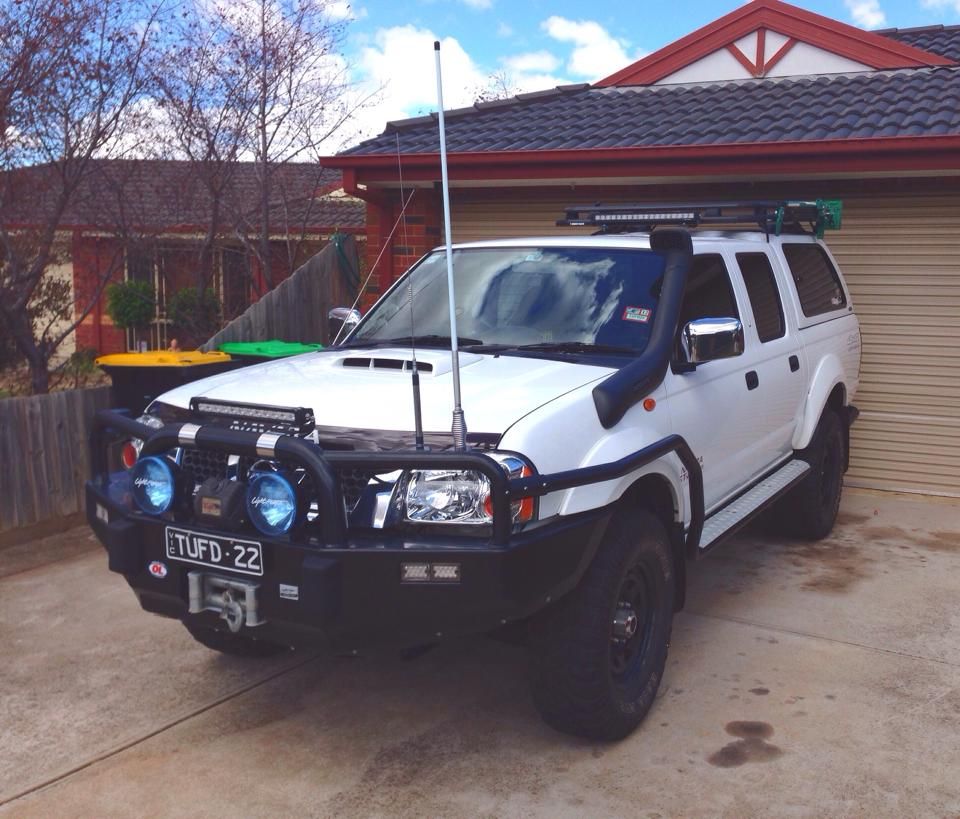
Nissan Frontier Navara Terrano Hardbody D22 1997-2004 factory workshop and repair manual download
 |
Nissan Frontier Navara Terrano Hardbody D22 ute/truck engine factory workshop and repair manual 1997-2004on PDF can be viewed using free PDF reader like adobe , or foxit or nitro . It is compressed as a zip file which you can extract with 7zip File size 122 Mb PDF document with bookmarks. Covers the Nissan Frontier Navara Terrano Hardbody D22 General Information covers the engines QD32 , KA24DE, VG30E, YD25DDTi, ZD30DDT, KA24E, VG33E, About the Nissan Navara D22
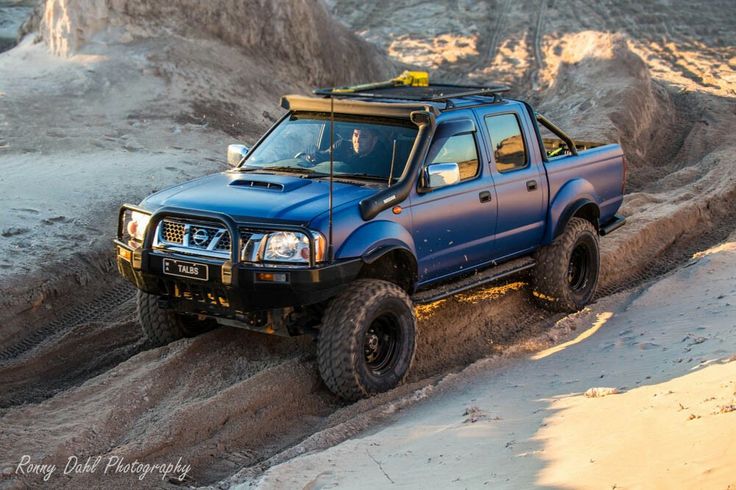
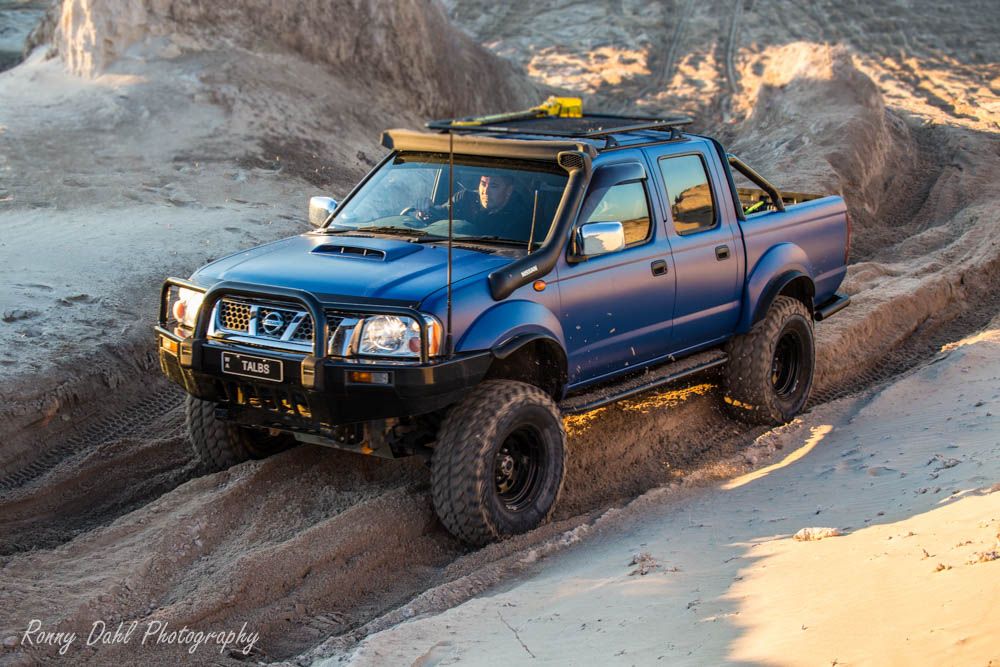
Nissan Navara is the name for the D22 and D40 generations of Nissan pickup trucks sold in Asia while in the North, Central and South America and the Philippines it's sold as Nissan Frontier. The line was started in 1998, and its immediate predecessor is the D21 Nissan Hardbody truck. As of 2002, the D22 series Nissan Truck is no longer sold in Japan, with the primary market having been relocated to North America. It is now built at the Smyrna, Tennessee Nissan factory.Nissan was the pioneer of the "Hardbody" or "Nissan Frontier" since 1986. The first was the D21, considered to be a small pick up. After more than 10 many years with the D21, the second generation Navara was manufactured from 1998 and went until 2005 which was classed as a compact sized pick up. It was changed with the bigger, taller, longer D40, which Nissan now considers to be a mid-size choose up truck.The Navara gets its name from the Navarre region of northern Spain, and the European variation is built at the Nissan factory in Barcelona.The Frontier was introduced in 1997 for the 1998 model year as a replacement for the aging 1986.5–1997 Nissan Hardbody Truck. Nissan first offered the Frontier with a 4-cylinder engine, the KA24DE, but added the V6 engine, the VG33E in 1999. Somewhere else, the Frontier was also known as the Nissan Navara.That changed, with the introduction of the 2000 Frontier Crew Cab. Chevrolet produced 4 door variations of its S-10 pickup in the late 90's, and Nissan began making its own 4 door version of the compact truck in 2000.For 2001, Nissan facelifted the Frontier, introducing bolder styling in an effort to make it more appealing to younger buyers in its second generation. The Frontier was completely redone after the 2004 model year, which later resulted in the suspension of the regular cab model, indefinitely. D22 (GEN-1) Names Datsun Japan, Frontier USA, Canada, Philippines, Argentina, Mexico and Brazil, Fiera Bolivia,Terrano Chile,Pick Up Europe, Central and South America, Africa, Asia ,Hardbody (codename J24) South Africa, Navara Europe and Australasia, Winner Middle East (Crew Cab only), Didsun or Datsun Persian Gulf countries, NP300 Frontier; Mexico in Mexico is a luxury trim of the NP300. Built in Japan from 1997 to 2000. Versions: solitary cab, King Cab, Crew Cab (Introduced in 2000 and only available on 2000-current models). Motors: Petrol (KA24DE) and Diesel (TD27) (4wd and 2wd) with 5 speed manual transmission. These models were additionally exported to Central and South America. US production in Tennessee started in 1998 with a solitary cab and a King cab. A Crew Cab arrived in 2000.In 2000, a special edition had been offered. Nissan called it the Desert Runner. It had a king cab base but on the 4X4 frame which gave it a boost in ride height, bigger tires and a 4-speed 2WD drivetrain. In 2001 the Desert Runner got a new look and a supercharged version of the V6 engine.Engines: 143 hp (107 kW) 2.4-liter (KA24DE) I4 and 170 hp (127 kW) 3.3-liter (VG33E) V6, Manual, 2wd or 4wd and Automatic. Japanese Production exported to South, Central America.The D22 Navara was a compact size pick up truck manufactured from 1997 to 2004. Nevertheless, Nissan goes on to build the D22 as a cheaper alternative to the current D40, and is understood as "Pickup". The first D22 Navaras (from 1997 to 2000) have actually a slightly different cosmetic appearance to the more recent designs (2001–2004). The first series of D22s had larger (QD32) 3.2-litre normally aspirated Diesel engines producing 75 kW. The second series has 4 available motor types. They were as follows:KA24DE: DOHC, 2.4-litre, 16V, 4-cylinder, producing 110 kW (148 hp) @ 5600 rpm and 208 NÃÃm (153 lbÃÃft) @ 3600 rpm. YD25DDTi (133 PS): 2.5-litre, DOHC, 16V, 4-cylinder, Turbo diesel intercooler, creating 98 kW (133 PS; 131 hp) @ 4000 rpm and 304 NÃÃm (31 kgÃÃm; 224 lbÃÃft) @ 2000 rpm. ZD30DDT: 3.0-litre, DOHC, 16V, Turbo, 4-cylinder diesel (non intercooler), producing 110 kW (148 hp) @ 3400 rpm and 314 NÃÃm (232 lbÃÃft) @ 2000 rpm. 6-cylinder, SOHC, 3.3-litre, 12V, producing 125 kW (168 hp) @ 4800 rpm and 266 NÃÃm (196 lbÃÃft) @ 2800 rpm. Currently the D22 Navara series remains on Nissan lineup for many nations and is known as Nissan NP300, Pickup, Frontier and Navara D22. In 2009 the D22 was updated with redesigned exterior door handles.The first Gen Frontier (2001–2004) was not sold in Japan. It was only produced in Japan for export. Product sales and production started in North America, with Crew Cab and King Cab versions and new bumper, taillights, headlights, grille. Other body changes included built in fender flares and tailgates. Available engines include a petrol 143 hp (107 kW) 2.4-liter Inline-4, 180 hp (134 kW) 3.3-liter V6, and a 210 hp (157 kW) 3.3-liter V6 Supercharged version. It's available with both 2-wheel and 4-wheel drive. Nissan began exporting the second generation to central and South America where it is called the Nissan Frontier. Solitary cabs and crew cabs are offered with the Diesel or Petrol engines, 2wd and 4wd. It's additionally available in New and Australia Zealand. The Brazilian plant began production around 2002 (Crew Cab Diesel 2wd or 4wd, 5-speed manual, or single cab 2wd Diesel. Just for Mexican market: petrol 2.4L manufactured in Mexico) and export to Argentina (all Brazilian versions) and Mexico (Crew Cab, Petrol 2.4L, 2wd, Manual 5-speed). The Egyptian Plant exports to the Middle East, and a South African Plant to African countries. Mexican production, starting in 2008: D22 truck Single Cab Chassis and Long Bed (4wd or 2wd, Petrol 2.4L or Diesel, Crew Cab (2wd and Petrol) called the D22 Pick up.Nissan Bolivia actually imports from Japan the Nissan Frontier D-22 Crew Cab, Petrol 2.4 or Diesel, 4x4. Imported from Mexico, the D-22 Crew Cab and single cab long Petrol, bed 4x2. Some Frontiers were imported from the USA. These were V6 and Automatic for private importers. Nissan Frontier Navara Terrano Hardbody D22 ute/truck engine factory workshop and repair manual 1997-2004 Download |
1) Carburetor theory — circuits and parts (high level)
- Float bowl & needle valve: maintain a reservoir of fuel at a set level. If level wrong, mixture across all ranges is wrong or it floods.
- Idle (pilot) circuit: supplies fuel at closed/throttle and low RPM. Controlled by idle jet and mixture screw.
- Main circuit (venturi + main jet + air bleed): supplies fuel at mid-to-high throttle. Pressure drop in venturi draws fuel through jets.
- Accelerator pump: gives an immediate shot of fuel on throttle opening to prevent flat spot.
- Choke (manual/automatic/thermostatic): enriches mixture for cold starting by restricting air and increasing fuel.
- Air/fuel metering diaphragms, piston or vacuum systems (depending on carb type): control transition and mixture.
- Vacuum ports/lines, intake manifold gasket: leaks introduce extra air → lean condition.
- Linkages, return springs: ensure smooth throttle response.
2) Symptom → likely root cause (short mapping)
- Hard cold start / cranking but won’t start: choke not operating/air enrichment or no fuel to bowl (needle stuck/empty).
- Rough idle / stalls at idle: clogged idle jet, wrong idle mixture, vacuum leak, wrong float level.
- Hesitation/flat spot on acceleration: accelerator pump failure, clogged main discharge, sticky metering valve.
- Black smoke/sooty plugs / poor economy: excessively rich (choke stuck closed, high float level, oversized jets).
- Flooding or fuel leaking from carb: stuck float/needle, worn seat.
- Surge at cruising speed: vacuum leak, incorrect idle mixture, or worn metering system.
3) Tools, parts, safety (brief)
- Basic hand tools, carburetor rebuild kit (gaskets, needles, jets, diaphragms), compressed air, carb cleaner, small picks, feeler gauges, new intake manifold gasket, torque wrench.
- Battery disconnected when working, fuel shutoff if present, work in ventilated area, catch fuel, no open flames.
4) Ordered diagnostic + repair procedure with theory & how repair fixes the fault
1. Safety & baseline checks
- Turn off engine, disconnect battery, inspect for obvious leaks, visually check choke linkage, fuel lines, vacuum hoses.
- Why: rules out simple external faults; vacuum or fuel feed issues mimic carb problems.
2. Confirm fuel supply to carburetor
- Verify fuel pump operation/pressure and that fuel reaches the bowl (open drain or remove bowl plug briefly).
- How it fixes fault: If no fuel or low pressure, carb cannot meter fuel; replacing/fixing pump or filter resolves fuel starvation/no-starts.
3. Check for vacuum leaks and intake sealing
- Inspect intake manifold gasket, vacuum hoses, carb base gasket; spray brake cleaner around base while engine runs (if running) to detect rpm change.
- How it fixes fault: Seals ensure metered air/fuel ratio. Fixing leaks restores designed vacuum signals and mixture; eliminates lean symptoms, rough idle.
4. Float level and needle/seat inspection
- Remove float bowl, inspect float for fuel seepage, check needle/seat for wear, measure float level to service spec and adjust.
- How it fixes fault: Correct float level ensures correct fuel head at jets. Too high → rich/flooding; too low → lean, poor performance.
5. Clean all jets, passages, and air bleeds
- Disassemble air/fuel passages, remove jets, soak in cleaner or use ultrasonic cleaning, blow out with compressed air; don't enlarge jets.
- How it fixes fault: Blocked idle/main/bleed passages restrict fuel flow causing hesitation, rough idle, or no-start at certain throttle positions. Cleaning restores metering.
6. Inspect & service accelerator pump and throttle shaft
- Check pump diaphragm, check for worn shaft bushings or air leaks at throttle shaft; replace pump or diaphragm if weak/leaking; bush shafts or replace carb if worn.
- How it fixes fault: Accelerator pump provides transient fuel. Replacing fixes flat spots on throttle. Shaft air leaks cause lean surge; bushing fixes restore proper idle/transition.
7. Choke system: operation & heat element
- Verify choke plate opens/closes properly, thermostatic or electric choke heating operates; adjust choke free play and fast idle per spec.
- How it fixes fault: Proper choke enriches for cold start only. A choke stuck closed keeps mixture rich causing black smoke and fouling; stuck open causes hard cold starts.
8. Replace gaskets, metering diaphragms, check linkage
- Rebuild with kit: gaskets, needle/seat, metering diaphragms, valves that are degraded. Reassemble and ensure smooth linkage return.
- How it fixes fault: Worn seals and diaphragms change pressures and leaks inside carb, altering metering; replacing restores original control.
9. Reinstall, set float & idle mixture/speed
- Start engine, warm to operating temp, set idle speed first (rpm), then adjust idle mixture screw for best steady rpm, re-check speed, and final mixture fine-tune.
- How it fixes fault: Idle mixture screw adjusts pilot circuit richness. Proper setting cures rough idle/stalling and ensures acceptable emissions/fuel economy at idle.
10. Road test and re-check
- Test acceleration, cruise, cold start, and warm idle. Re-inspect for fuel leaks and vacuum leaks. If surging persists, re-check for vacuum leaks or worn internal metering parts.
- How it fixes fault: Confirms repairs address original symptoms and reveals intermittent issues.
5) Quick mapping: common symptom → immediate first part to check
- No fuel in bowl → needle/seat, fuel pump, clogged filter.
- Rich at all throttle positions → float level, stuck choke, oversized main jet, leaking needle valve.
- Lean at part throttle → clogged main jet or air bleed, vacuum leak, worn metering diaphragm.
- Flat spot on throttle → accelerator pump or clogged discharge.
6) Final notes on limits and when to replace
- Excessive wear of throttle shaft bores, distorted castings, or multiple internal parts worn — rebuilding may be ineffective; replacement carb or conversion to fuel injection (major) may be needed.
- Always set float and mixture per the factory spec for that carb model; small deviations change A/F significantly.
This orders diagnosis from fuel supply and vacuum integrity outward to internal metering, explains the function of each subsystem, the effect of its failure on symptoms, and why each repair step corrects the fault.
rteeqp73
 Most diesels can have to use some diesel diesel engines. If all the
 tandard pair or lower leaks which take each type of bearing package. Current screwdrivers can handle much following the simplest extends process is
  .
.You Might Also Like...
|
|


|

